Do your knees or hips hurt on stairs, getting up, or after a day of exploring?
Knee & Hip Physiotherapy on Koh Lanta
Knee or hip arthritis, runner's knee, or pain when squatting. Your physiotherapist eases the pain and strengthens the muscles around the joint so you can walk with confidence.
- Free 30-min first consultation
- Licensed physiotherapists
- Insurance claim documents

Does this sound like you?
- Stairs make your knee hurt
- You push up with your hands to get out of a chair
- Squatting or kneeling is harder than it used to be
- Your hip or groin aches after a long walk
- Your knee is stiff in the morning or after sitting
- Running hurts around your kneecap
Why not just wait it out?
Knee or hip pain makes you walk less, so thigh and hip muscles weaken and the joint takes more load, which makes it hurt more easily. The right strengthening breaks that cycle.
If even one of these fits, start with a free 30-minute consultation. No charge.
Book a free consultationWhat makes LantavaFix different
Cause first
A proper history and examination every time, not just treating where it hurts
60–90 minute sessions
Enough time for assessment, hands-on treatment, equipment and exercises in one visit
Progress measured
Pain score and progress recorded each visit, so you can see how much you improve
Exercises in an app
Your programme on Physitrack with videos to follow at home or while travelling
Your first visit
- 1
Talk it through
Where it hurts, how long, and what makes it better or worse
- 2
Find the cause
Movement, muscle strength and nerve tests
- 3
Treatment starts
Hands-on and equipment-based treatment from the first visit
- 4
Your plan
Exercises to do, how many visits to expect, and what to avoid
Read about each condition
Most knee and hip pain improves with treatment combined with strengthening the muscles around the joint. Pick the topic that matches you below.
1Hip pain
What it feels like
Pain at the side of the hip, groin or buttock, often after walking a long way, on stairs or lying on that side.
How we treat it
We examine the hip joint, muscles and lower back to find the source, ease pain with equipment and hands-on treatment, then strengthen the hip muscles.
See a doctor if
You fell and cannot take weight on the leg, you have a fever, or the pain is severe at night even at rest.
2Hip arthritis (osteoarthritis)
What it feels like
A stiff hip with deep groin pain, trouble putting on socks or getting into a car, slowly worsening over months.
How we treat it
We ease pain and improve joint range, strengthen the hip and core, and teach ways of walking and climbing stairs that reduce load on the joint.
See a doctor if
You cannot walk even short distances, the pain is constant at rest, or your doctor has suggested assessing for surgery.
3Knee pain
What it feels like
Pain at the front, inside or back of the knee, sometimes with swelling, clicking or tightness when bending.
How we treat it
We examine the joint, ligaments and thigh muscles to find the cause, reduce pain and swelling with equipment, then strengthen the thigh and hip to support the knee.
See a doctor if
The knee swelled up straight after an injury, you cannot take weight, it locks and won't straighten, or it is red, hot and swollen with a fever.
4Knee arthritis (osteoarthritis)
What it feels like
Morning stiffness or stiffness after sitting, pain on long walks, stairs or squatting. Some people notice bowing or grinding.
How we treat it
We ease pain with ultrasound, shockwave or electrical stimulation where suitable, strengthen the thigh muscles, and teach how to use the knee day to day.
See a doctor if
The knee becomes suddenly red, hot and swollen, the pain stops you walking, or symptoms worsen quickly despite regular physio.
5Runner's knee
What it feels like
Pain around or under the kneecap, worse when running, going downhill or sitting with bent knees.
How we treat it
We look at your running and the muscles involved, ease pain with equipment, adjust your training load, and strengthen the hips and thighs before you return to full running.
See a doctor if
The knee swells after running, locks, or hurts so much you limp.
6Pain on stairs or squatting
What it feels like
Knee pain mainly on stairs, squatting or getting up from a low seat, while walking on the flat is usually fine.
How we treat it
We check kneecap movement and thigh strength, retrain how you load the knee and stand up from sitting, and build strength step by step until you are back to your activities.
See a doctor if
The pain comes with swelling, the knee often gives way, or it started after an accident.
Equipment and methods we use
Your physiotherapist chooses what suits you after the assessment
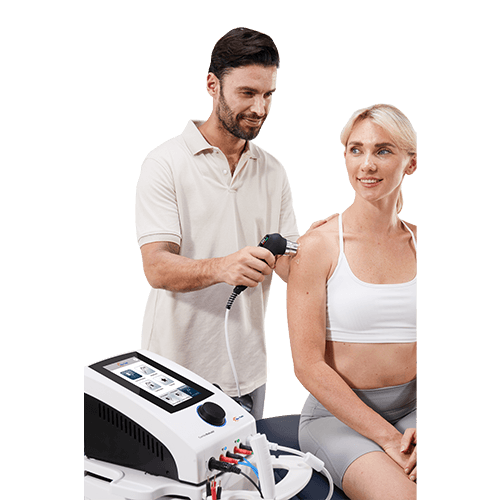
Ultrasound therapy
Sound waves to ease pain and help tissue heal
Learn more
Electromagnetic stimulation (PMS)
Magnetic pulses through clothing: fast pain relief, e.g. sciatica and knee osteoarthritis, and wakes up weak nerves and muscles, e.g. after a stroke
Learn more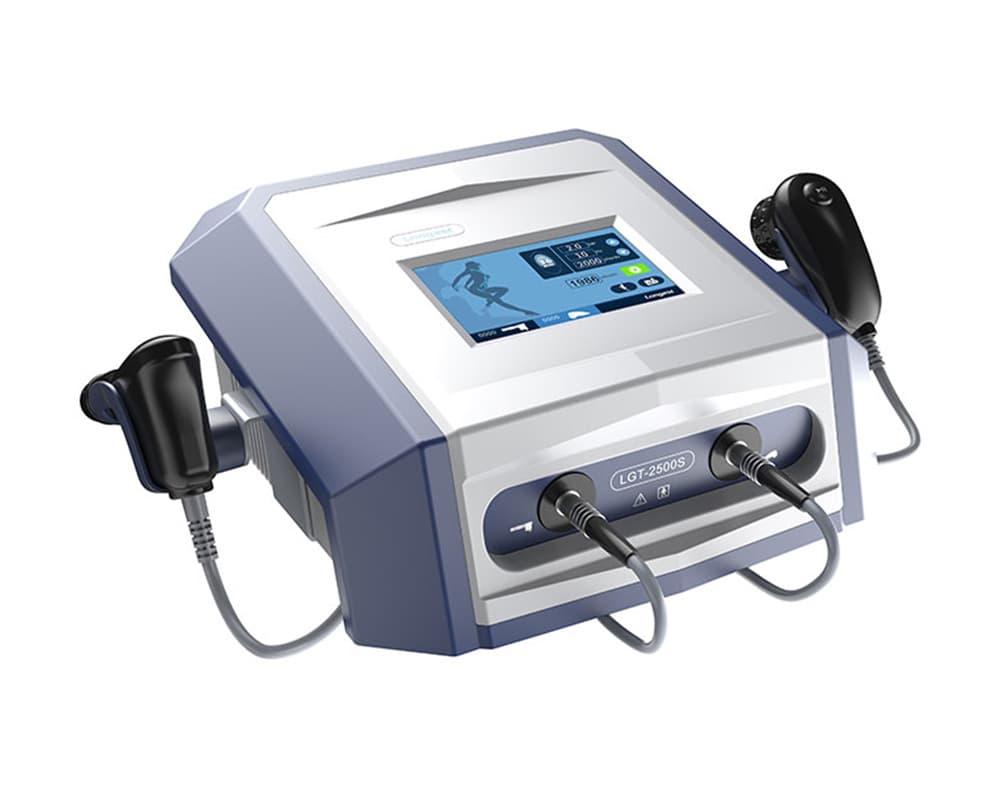
Shockwave therapy
Pressure waves for long-lasting tendon and heel pain
Learn more
Electrical stimulation
Gentle current to ease pain or wake up weak muscles
Learn more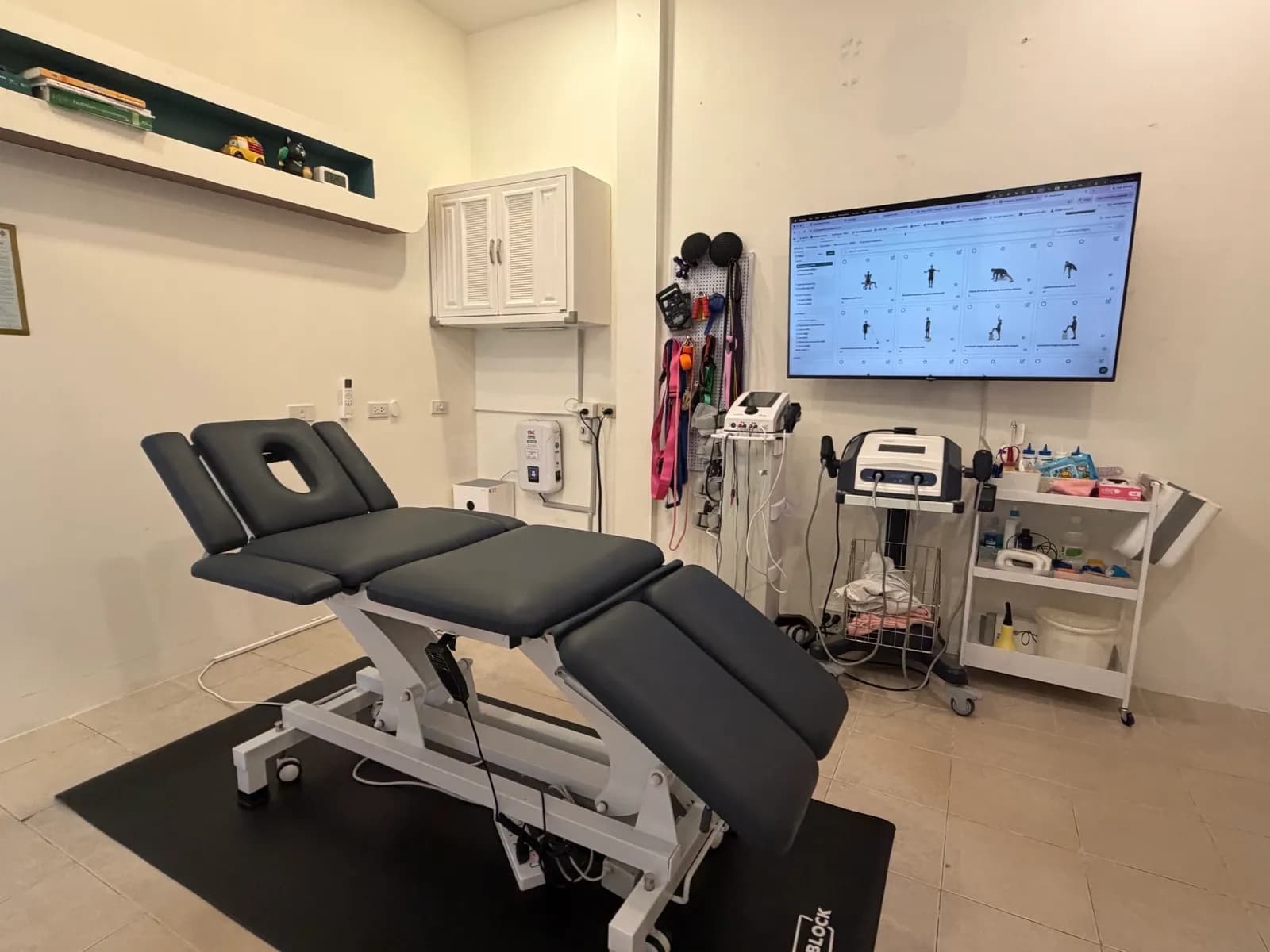
Functional training
Practise real moves: walking, stairs, lifting, sport

Home exercise plan
Exercises to keep improving between visits
Who will treat you
PT Suttida Chooluan
Physiotherapist · licensed by the Physical Therapy Council of Thailand
Treats both local patients and travellers, in Thai and English
View profileChoose your service when booking
Free consultation, 30 min
Not sure yet? A physio assesses you and suggests a plan, at no charge
Book a free consultationPhysiotherapy, 60–90 min
Assessment, hands-on and equipment-based treatment, and a personal exercise plan in one visit
Book for thisInsurance claim documents are issued right after payment
Inside the clinic


486/2 Moo 3, Sala Dan, Ko Lanta, Krabi 81150, Thailand Open Mon–Sat, 9:00 AM – 7:00 PM
Frequently asked questions
Can physiotherapy help knee arthritis?
Yes. Strengthening exercise for the muscles around the knee is a main recommended treatment for knee osteoarthritis, helping with pain and day-to-day function.
Should I stop walking?
Usually not completely. Your physio will tell you how much walking or exercise you can do without making it worse.
Do I need an X-ray first?
Usually not. Your physio examines you first and will refer you to a doctor if more tests are needed. Bring any previous X-rays or reports.
Can I claim from insurance?
The clinic issues insurance claim documents right after payment. Coverage depends on your policy.
Do your knees or hips hurt on stairs, getting up, or after a day of exploring?
See a physiotherapist on Koh Lanta
Your condition is already selected on the booking page, just pick a time. Or message us first.
This page is general information, not a diagnosis. For severe or emergency symptoms, see a doctor immediately.