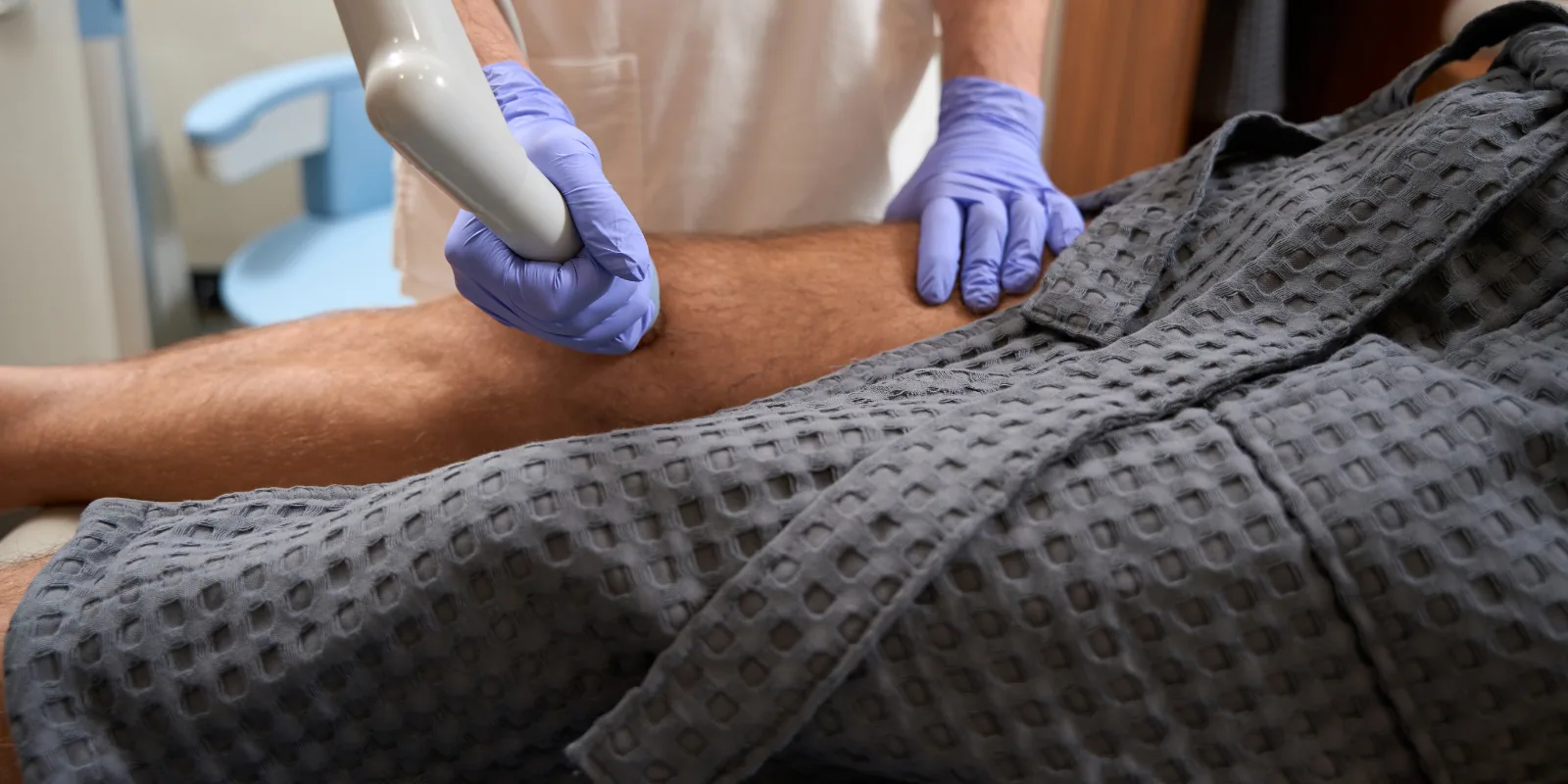
After an Accident: How Physiotherapy Helps Prevent Joint Stiffness (ROM Block) — and When You Need Further Testing
After a fracture, dislocation, or soft tissue injury, many people don't realize that staying still for too long can leave a joint permanently stiff. Here's how physiotherapy prevents that, and when further testing is needed first.
After an accident — a motorbike crash, a fall, a sports injury — most people focus only on the fracture healing or the wound closing. But there's an equally important risk that's easy to overlook: the joint and surrounding muscles can stiffen up (ROM block) if they're not managed properly from the start.
Physiotherapy started as early as it's safely possible to do so — combined with proper swelling management and a structured mobilization program — significantly reduces the risk of joint stiffness. But in some situations, further testing is needed before or during treatment to make sure nothing more serious is being missed.
Why Joints Stiffen Up After an Accident
Prolonged casting or splinting — when a joint goes unmoved for an extended period, the joint capsule and surrounding tissue shorten and lose flexibility.
Unmanaged swelling — if swelling is allowed to sit for too long without being addressed, it can lead to fibrosis around the joint that restricts movement long-term.
Pain-avoidance behavior (guarding) — patients often avoid moving the injured area out of fear of pain. The less it moves, the stiffer it gets — a self-reinforcing cycle.
Scar tissue from soft tissue injury — as injured tissue heals itself, it commonly forms scar tissue that adheres to nearby structures. Without early movement, this scar tissue hardens and restricts motion.
How Physiotherapy Helps Prevent Joint Stiffness
Early Controlled Mobilization, as Soon as It's Safe
A meta-analysis in patients with surgically fixed distal radius fractures found that starting movement earlier than standard protocol led to better wrist range-of-motion outcomes than delayed mobilization, without increasing complications.[1]
Manual Therapy to Release Adhesions
Physiotherapists use joint mobilization and soft tissue release techniques to address early adhesions before they harden into permanent stiffness.
Structured Swelling Management
Elevation, appropriate cold/heat application depending on the injury stage, and lymphatic drainage techniques help reduce the swelling buildup that leads to fibrosis.
Progressive Stretching and Loading Program
Once the acute phase has passed, your physiotherapist gradually increases range of motion and load as the tissue is ready for it — along with education on safe movement, so you don't stay so still that the joint stiffens up.
When Further Testing Is Needed Before or During Physiotherapy
Signs That Warrant Further Testing
• Suspected fracture that hasn't yet been confirmed with an X-ray
• Numbness, weakness, or abnormal sensation suggesting nerve involvement from the accident
• Unusually severe swelling, worsening pain, pale or cold skin, weakening pulse — suspected compartment syndrome, requiring emergency care immediately
• A joint that feels unstable or loose, or suspected ligament tear/dislocation
• Range of motion isn't improving as expected despite appropriate physiotherapy — may need imaging to rule out heterotopic ossification (abnormal bone formation) or another internal joint issue requiring different treatment, such as surgery.[2]
In these situations, your physiotherapist will refer you to a doctor for further imaging — X-ray or MRI — to identify the actual cause before continuing treatment.
Quick Summary
| Situation | Guideline |
|---|---|
| General injury with no warning signs | Begin physiotherapy as soon as safely possible |
| Severe swelling with progressively worsening pain | See emergency physician immediately (suspected Compartment Syndrome) |
| Numbness, weakness after accident | Further neurological examination |
| After physiotherapy, ROM not improving as expected | Further examination (X-ray/MRI) |
LantavaFix Physiotherapy Clinic Koh Lanta
After an accident, we have a physiotherapy team to assess and plan a prevention program for joint stiffness from the initial stage, and immediately refer to a doctor if we find signs that require further examination.
References
- [1] Deng, Z., Wu, J., Tang, K., Shu, H., Wang, T., Li, F., & Nie, M. (2021). In adults, early mobilization may be beneficial for distal radius fractures treated with open reduction and internal fixation: A systematic review and meta-analysis. Journal of Orthopaedic Surgery and Research, 16, 691. https://doi.org/10.1186/s13018-021-02837-0
- [2] Siemensma, M. F., van der Windt, A. E., van Es, E. M., Colaris, J. W., & Eygendaal, D. (2023). Management of the stiff elbow: A literature review. EFORT Open Reviews, 8(5), 351–360. https://doi.org/10.1530/EOR-23-0039
This article is written for general informational purposes and is not a medical diagnosis. If you have symptoms following an injury, you should be evaluated directly by a physician or physical therapist.