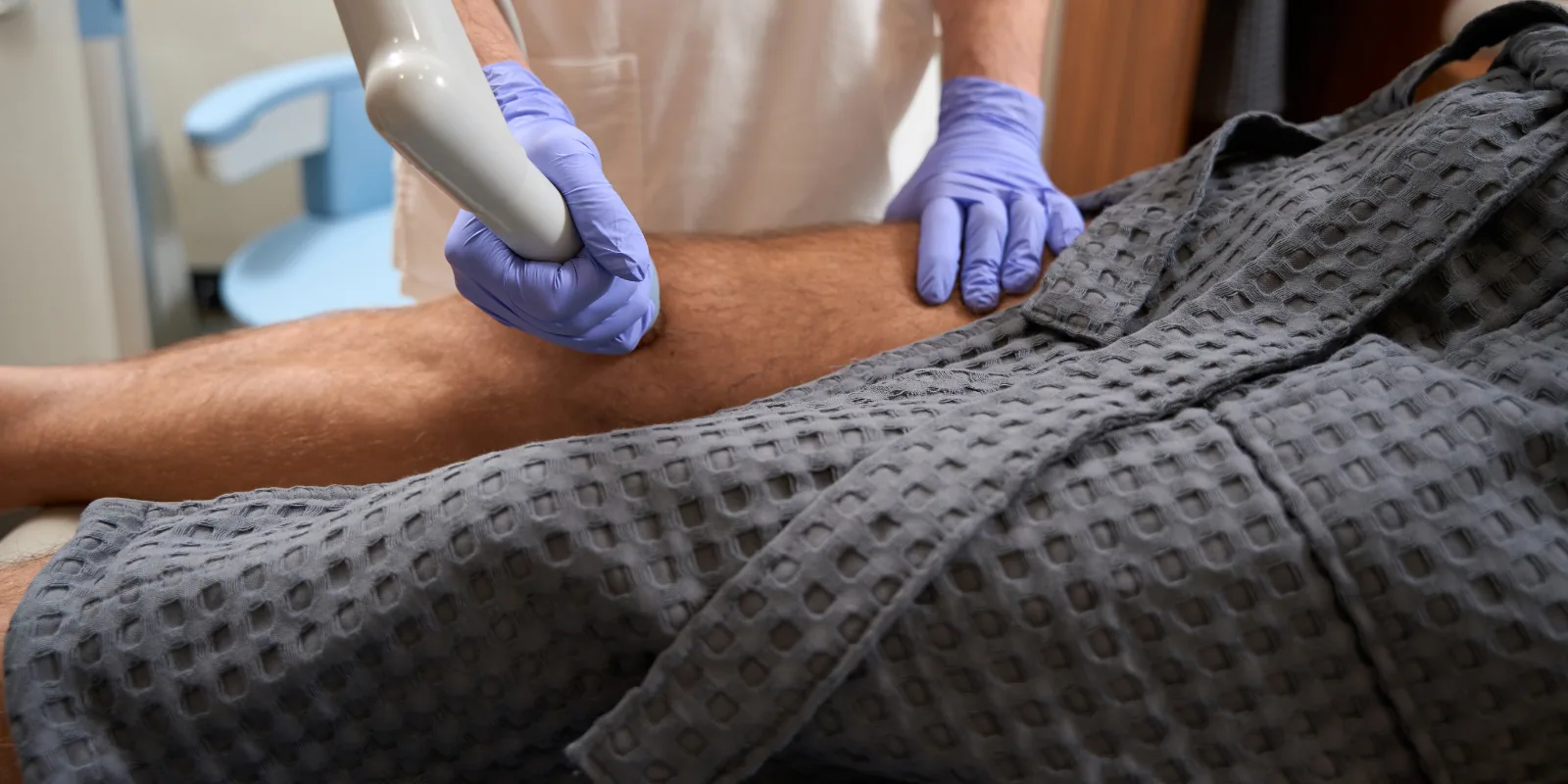
Knee Osteoarthritis: How Necessary Is Physiotherapy, and When Should You See an Orthopedic Doctor?
Is physiotherapy enough on its own? Do you need blood tests, or an injection? This guide maps out the treatment options for knee osteoarthritis.
Knee osteoarthritis is extremely common in adults, but many people aren't sure where to start — is physiotherapy enough, or should you go straight to an orthopedic doctor, get blood work, or get an injection?
For most cases of knee osteoarthritis, physiotherapy is the first-line treatment according to international clinical guidelines — not a secondary option you try after an injection. Injections and surgery are options to consider when physiotherapy and lifestyle changes aren't enough, or when more serious signs are present.
Why Physiotherapy Comes First
Guidelines from the American College of Rheumatology and the Arthritis Foundation strongly recommend exercise and patient education as first-line treatment for knee osteoarthritis — ahead of most medications and injections.[1]
The right exercise program (strengthening the muscles around the knee, flexibility work, low-impact cardio) reduces pain, improves joint function, and can help slow the condition's progression over the long term.
When Is Physiotherapy Enough On Its Own?
Physiotherapy alone is usually sufficient when:
• Pain is mild to moderate, and you can still walk and manage stairs
• There's no significant swelling, locking, or instability in the joint
• There are no neurological symptoms, such as numbness or weakness
• You notice improvement within the first 4–6 weeks of consistent treatment
When Should You See an Orthopedic Doctor?
Signs to See an Orthopedic Doctor
• Significant, unusual swelling, warmth, or recurring joint fluid buildup
• Sudden locking of the knee, loss of full range of motion, or a feeling of the knee giving way
• Visible deformity, such as bowing of the leg, or noticeable leg-length difference
• Severe pain at night that disrupts sleep
• No improvement — or worsening — after 2–3 months of appropriate physiotherapy
• Osteoarthritis severe enough to significantly limit daily life (can't walk far, can't manage stairs)
In these cases, an orthopedic doctor may order further imaging — X-ray or MRI — to assess severity, and may consider other options such as injections or, in severe cases, knee replacement surgery.
Do You Need Blood Tests?
For typical wear-and-tear (degenerative) knee osteoarthritis, blood tests aren't needed for diagnosis — it's a cartilage degeneration process, not an autoimmune inflammatory condition.
Blood tests become relevant if you suspect:
• Rheumatoid arthritis or another autoimmune condition (symmetric swelling in multiple joints, morning stiffness lasting over an hour)
• Gout (sudden, hot, red swelling, often at the big toe or knee)
• A joint infection (severe hot swelling combined with fever)
Injections — What Each Type Is Actually For
Corticosteroid Injection
Provides fast, short-term relief of pain and swelling (over a few weeks) — useful during a flare-up. However, a randomized controlled trial found that repeated injections every 3 months over an extended period were associated with greater cartilage volume loss, with no added pain relief compared to placebo.[2] It shouldn't be used routinely or repeated frequently without clear indication.
Hyaluronic Acid (Viscosupplementation)
The ACR/Arthritis Foundation guideline conditionally recommends against its use, as the evidence for clinical benefit isn't strong enough relative to its cost and risk.[1]
PRP (Platelet-Rich Plasma)
Still an area of ongoing research. Study results have been inconsistent enough that it isn't yet considered a standard treatment. Speak directly with a specialist if you're considering this option.
Quick Guide: Which Symptom, Which Path
| Symptoms | Guidelines |
|---|---|
| Mild to moderate pain, still functional | Physiotherapy |
| Acute exacerbation of severe pain | Physiotherapy + consider short-term steroid injection |
| Joint locking/significant swelling/obvious deformity | See orthopedic doctor |
| Multiple joint swelling with fever and prolonged morning pain | Blood test + see physician |
| No improvement after 2–3 months of physiotherapy | See orthopedic doctor for further assessment |
LantavaFix Physiotherapy Clinic Koh Lanta
We assess the severity of knee osteoarthritis and design personalized exercise programs, while clearly informing you if we find signs that should be referred to an orthopedic doctor for further evaluation.
References
- [1] Kolasinski, S. L., Neogi, T., Hochberg, M. C., Oatis, C., Guyatt, G., Block, J., Callahan, L., Copenhaver, C., Dodge, C., Felson, D., Gellar, K., Harvey, W. F., Hawker, G., Herzig, E., Kwoh, C. K., Nelson, A. E., Samuels, J., Scanzello, C., White, D., ... Reston, J. (2020). 2019 American College of Rheumatology/Arthritis Foundation guideline for the management of osteoarthritis of the hand, hip, and knee. Arthritis Care & Research, 72(2), 149–162. https://doi.org/10.1002/acr.24131
- [2] McAlindon, T. E., LaValley, M. P., Harvey, W. F., Price, L. L., Driban, J. B., Zhang, M., & Ward, R. J. (2017). Effect of intra-articular triamcinolone vs saline on knee cartilage volume and pain in patients with knee osteoarthritis: A randomized clinical trial. JAMA, 317(19), 1967–1975. https://doi.org/10.1001/jama.2017.5283
This article is written to provide general knowledge and is not a medical diagnosis. The selection of appropriate treatment methods should be done through direct assessment by a physiotherapist or physician.