Physiotherapy Equipment Explained: How It Differs, and How Often You Need It
Ultrasound, electrical stimulation, shockwave, PMS — a plain-language guide to what each one does, and how many sessions it typically takes to see results.
Most physiotherapy clinics use several types of equipment, but they're not interchangeable. This guide breaks down, as simply as possible, what each device does, which conditions it suits, and roughly how many sessions it takes.
Quick Guide: Which Tool for Which Symptom
| General muscle pain, knee pain | Ultrasound |
| Weak muscles, muscle tension | Electrical stimulation |
| Bruises, chronic elbow tendon/shoulder inflammation | Shockwave (ESWT) |
| Pain and numbness from compressed nerves | PMS |
This is a general guide only — the right tool for you should always be confirmed by a physiotherapist's assessment.
1. Ultrasound
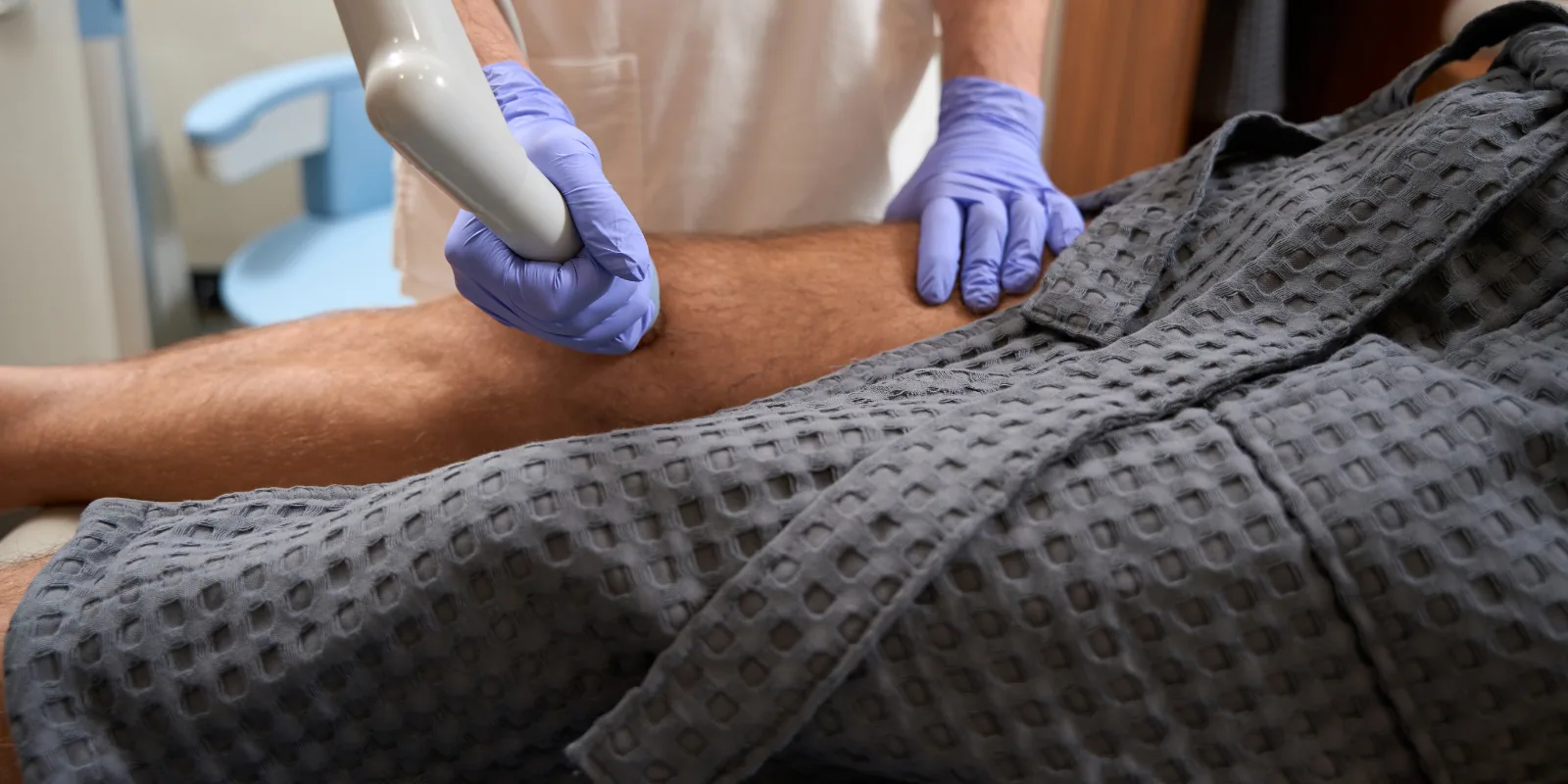
What it does: Delivers sound waves that generate gentle heat deep in the muscle tissue, boosting local blood flow and reducing inflammation.
Best suited for:
• General muscle pain and tightness
• Knee conditions (good supporting evidence)
• Shoulder conditions (evidence is mixed — needs case-by-case assessment)
References [3][4]
2. Electrical Stimulation
What it does: Pads on the skin deliver a mild electrical current that activates muscles and nerves directly.
Best suited for:
• Muscle pain and spasm
• Weakened muscles that need re-activation (e.g. post-surgery, or after a long period of disuse)
3. Shockwave Therapy (ESWT)
What it does: Delivers high-energy acoustic pulses into areas of chronic inflammation or fibrous tissue, boosting blood flow and stimulating tissue repair.
Best suited for:
• Plantar fasciitis
• Tennis/golfer's elbow
• Chronic shoulder tendinitis
• Trigger points that haven't responded to other treatment
The strongest evidence base of the four — references [1][2]
4. PMS – Peripheral Magnetic Stimulation
What it does: Uses a high-intensity magnetic field, passed through the skin without contact, to stimulate nerves and muscles more deeply than standard e-stim — and painlessly.
Best suited for:
• Pain and numbness from nerve compression, such as a herniated disc
• Numb hands or feet from nerve compression
• Nerve-related muscle weakness
References [5][6]
So How Many Sessions Until It's Resolved?
Most conditions take roughly 4–8 weeks of physiotherapy, depending on:
• Severity and duration — recent-onset issues generally resolve faster than something that's been going on for months or years
• The type of condition — chronic tendinopathy usually takes longer than general muscle soreness
• Consistency — attending sessions regularly and doing the home exercises your physiotherapist gives you makes a real difference to recovery speed
• Individual response — some people improve quickly, others need the plan adjusted along the way
A good physiotherapist re-assesses periodically and adjusts frequency or approach based on your actual progress, rather than running the same plan on autopilot.
LantavaFix Physiotherapy Clinic Koh Lanta
We have Ultrasound, Electrical Stimulation, Shockwave (ESWT), and PMS equipment with physiotherapists ready to assess and design treatment frequency tailored specifically to your condition
References
- [1] Aqil, A., Siddiqui, M. R., Solan, M., Redfern, D. J., Gulati, V., & Cobb, J. P. (2013). Extracorporeal shock wave therapy is effective in treating chronic plantar fasciitis: A meta-analysis of RCTs. Clinical Orthopaedics and Related Research, 471(11), 3645–3652. https://doi.org/10.1007/s11999-013-3132-2
- [2] Al-Siyabi, Z., Karam, M., Al-Hajri, E., Alsaif, A., Alazemi, M., & Aldubaikhi, A. A. (2022). Extracorporeal shockwave therapy versus ultrasound therapy for plantar fasciitis: A systematic review and meta-analysis. Cureus, 14(1), e20871. https://doi.org/10.7759/cureus.20871
- [3] van der Windt, D. A. W. M., van der Heijden, G. J. M. G., van den Berg, S. G. M., Ter Riet, G., de Winter, A. F., & Bouter, L. M. (1999). Ultrasound therapy for musculoskeletal disorders: A systematic review. Pain, 81(3), 257–271. https://doi.org/10.1016/S0304-3959(99)00016-0
- [4] Guan, H., Wu, Y., Wang, X., Liu, B., Yan, T., & Abedi-Firouzjah, R. (2024). Ultrasound therapy for pain reduction in musculoskeletal disorders: A systematic review and meta-analysis. Therapeutic Advances in Musculoskeletal Disease, 16. https://doi.org/10.1177/20406223241267217
- [5] Kanjanapanang, N., & Chang, K.-V. (2022). Peripheral magnetic stimulation. In StatPearls. StatPearls Publishing. https://www.ncbi.nlm.nih.gov/books/NBK526087/
- [6] Madhuripu, P., Premkumar, M., Riyas Basheer, K. B., Arunkrishnan, V. R., Ajay, K. G., Pinto, R. F., & Kolar, R. (2025). Evaluating the impact of repetitive peripheral magnetic stimulation (rPMS) on physical therapy outcomes for musculoskeletal and neurological disorders. Journal of Orthopaedic Reports. https://doi.org/10.1016/j.jorep.2025.100652
This article is written for general informational purposes and is not medical advice. The actual frequency of treatment may vary from person to person. You should consult a physical therapist to receive a treatment plan suitable for you.