Portable TENS vs. Clinic Combination Machines: What's the Difference, and Which Is Good for What?
A portable TENS unit you buy for home use, versus a multi-mode stimulation machine used in a clinic — what actually separates them, and which suits which situation?
A lot of people wonder whether a portable TENS unit bought online or from a pharmacy is really any different from the multi-mode electrical stimulation machines used in physiotherapy clinics — or if it's just a matter of price. This article breaks it down clearly.
Both work on the same basic principle — stimulating nerves with electrical current through the skin — but differ in power output, range of modes, and professional oversight. A portable TENS unit suits general self-managed pain at home; a clinic combination machine suits treatment requiring finer parameter control and a physiotherapist's assessment alongside it.
What Is TENS?
TENS (Transcutaneous Electrical Nerve Stimulation) stimulates nerves using a mild electrical current delivered through electrode pads on the skin, helping ease pain via the Gate Control mechanism (blocking pain signals at the spinal cord) and by triggering endorphin release.
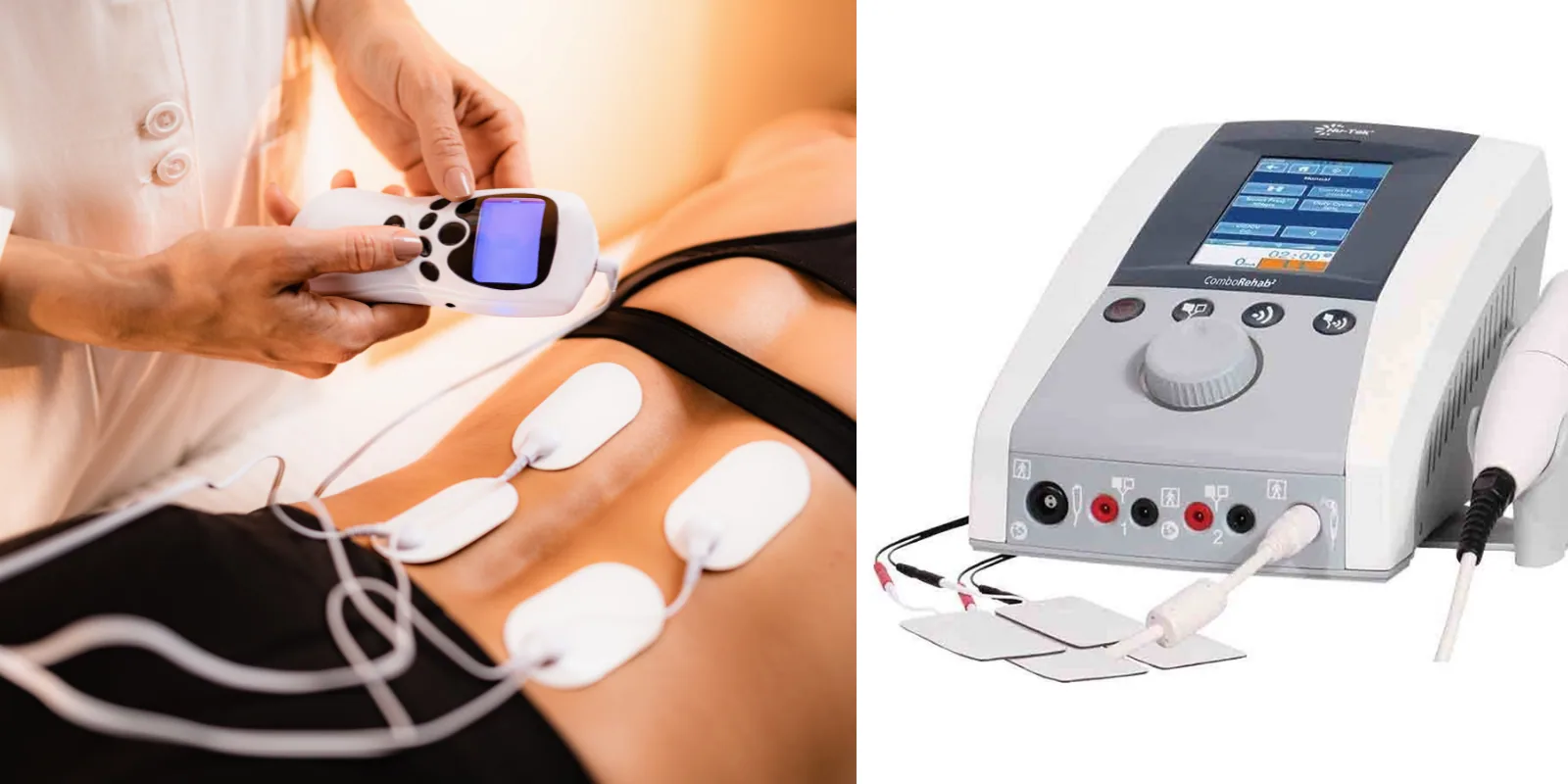
Portable TENS Units
• Small, battery-powered, easy to carry, relatively inexpensive
• Usually 1–2 channels, with simplified settings
• Lower power output and intensity ceiling, for safety when used unsupervised at home
• Well suited to ongoing use throughout the day for general chronic pain
Clinic Combination Machines
• Multiple modes in a single unit — TENS, NMES (muscle stimulation), IFC (interferential current), Russian stimulation, and more
• Multiple channels, with finer control over frequency, pulse width, and waveform
• Higher power output, capable of delivering the intensity needed for the intended treatment effect, under a physiotherapist's supervision
• Used alongside a physical assessment, with electrode placement adjusted based on exam findings
| Portable TENS | Clinic Multi-Function Unit | |
|---|---|---|
| Intensity/Power | More limited for safe home use | Higher, finely adjustable under professional supervision |
| Chip Quality/Current Smoothness | Budget chip, rougher current | High-quality chip, smoother current |
| Operating Modes | Primarily TENS only | Multiple modes (TENS, NMES, IFC, etc.) |
| Control and Supervision | Home use without expert supervision during application | Use under physiotherapist assessment |
| Suitable For | General chronic pain, continuous daytime use | Conditions requiring specific parameter adjustments |
Why Waveform Precision Matters
Different price tiers of stimulation devices use different quality microcontrollers/chips, which directly affects how finely the output current can be controlled.
Cheaper or portable units often use chips with coarser, more "stepped" current control, producing an output that feels more jolting rather than smooth. Patients using these devices tend to hit their pain threshold sooner, before reaching a truly effective intensity.
Higher-quality clinic machines use chips and circuitry capable of much finer current control, with smoother ramp-up and ramp-down of the signal. This makes higher intensities feel more comfortable — which connects directly to the research above showing that "strong, non-painful" intensity is a key factor in TENS effectiveness.[1] In plain terms: a smoother current lets a patient tolerate a more effective intensity without discomfort, which directly impacts the treatment outcome.
How Effective Is TENS, According to the Evidence?
A large meta-analysis pooling 381 studies with over 24,532 participants found moderate-certainty evidence that TENS reduces pain intensity during and immediately after stimulation compared with placebo, with no serious adverse events.[1] Importantly, the trials in this review used "strong, non-painful intensity" as the eligibility criterion — intensity is a key factor in effectiveness. This is where clinic combination machines have an advantage: they can deliver higher, more precisely calibrated intensity under professional supervision.
Which One Is Good for What
• General muscle/joint pain, wanting daily self-management → a portable TENS unit is well suited for ongoing, on-the-go use
• Targeted pain needing high precision, or weakened muscle rehabilitation → a clinic combination machine with NMES/IFC modes is better suited
• Not sure which mode fits your condition → have a physiotherapist assess you first, to recommend the right mode and intensity
Quick Summary
| Requirements | Recommendation |
|---|---|
| Self-care at home, general pain | Portable TENS |
| Need specialized modes (NMES/IFC) | Clinic combination unit |
| Unsure which condition is suitable | Consult with a physiotherapist first |
LantavaFix Physiotherapy Clinic Koh Lanta
We have multi-modal physiotherapy equipment with physiotherapists who will assess and adjust parameters to suit your condition. If you are interested in using TENS at home as a supplement, we can recommend how it should be set up.
References
- [1] Johnson, M. I., Paley, C. A., Jones, G., Mulvey, M. R., & Wittkopf, P. G. (2022). Efficacy and safety of transcutaneous electrical nerve stimulation (TENS) for acute and chronic pain in adults: A systematic review and meta-analysis of 381 studies (the meta-TENS study). BMJ Open, 12(2), e051073. https://doi.org/10.1136/bmjopen-2021-051073
This article is written for general information purposes only and is not medical advice. Consult a physiotherapist before using TENS on your own, especially if you have a pacemaker or chronic medical conditions.