Which Physiotherapy Improves Exercise Performance — and Can You Do Both at Once?
Physiotherapy isn't just for treating injuries — certain techniques genuinely improve how well your training works. Here's what helps, and how cardio and weight training differ when paired with physio.
A lot of people assume physiotherapy is only for treating injuries. In reality, several physiotherapy techniques directly prepare your body to train better — and they can run alongside your regular exercise routine, not just before or after it.
Yes, you can do physiotherapy and exercise at the same time — and it's generally a good idea. Physiotherapy addresses the specific weak links that hold back training quality, such as limited joint range of motion, muscle imbalances, or faulty movement patterns, which makes your subsequent training more effective and lowers injury risk.
Which Physiotherapy Techniques Improve Exercise Performance
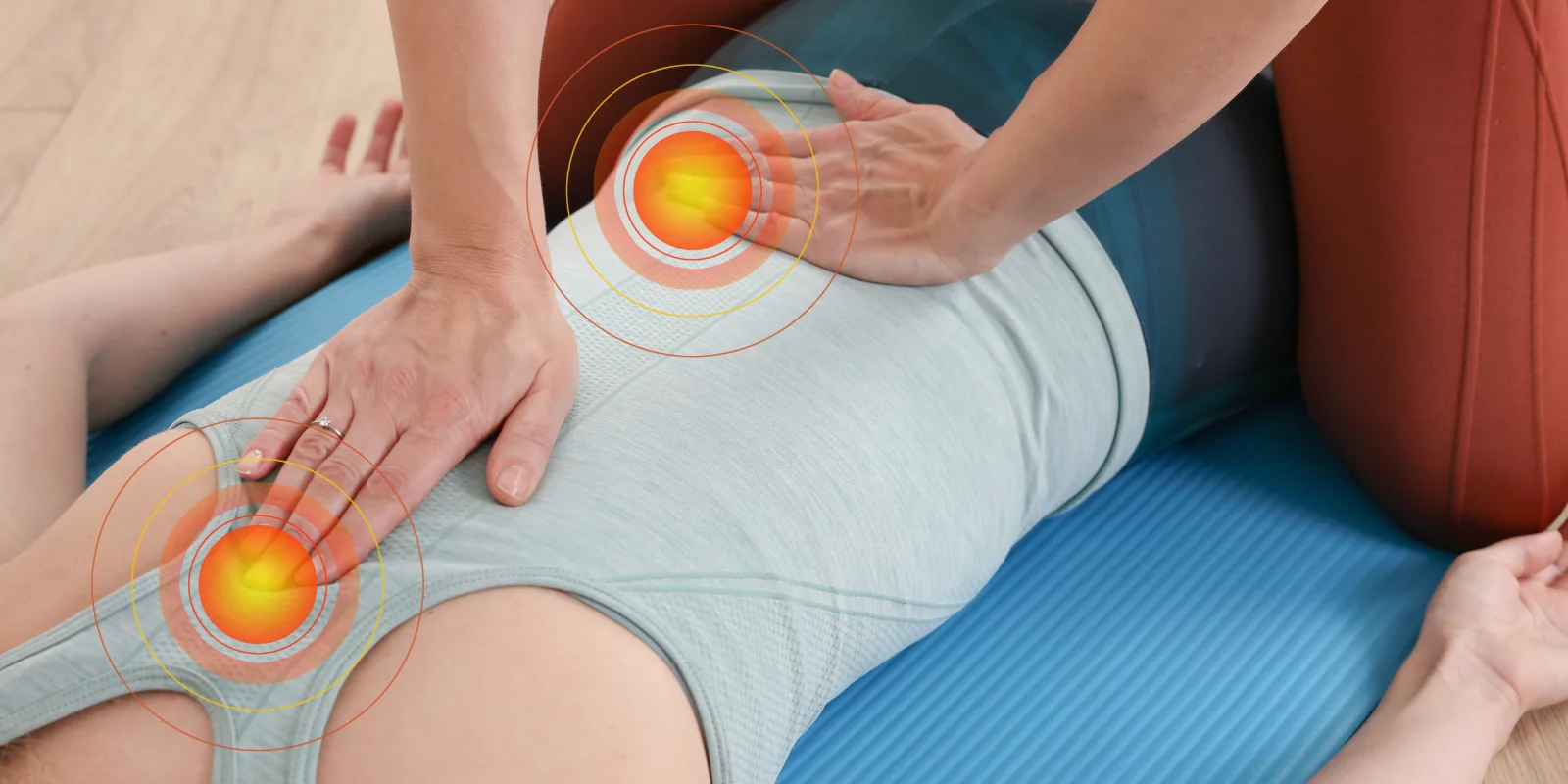
Manual Therapy Combined with Exercise
A meta-analysis found that manual therapy (joint mobilization, soft tissue release) combined with exercise produced better short-term outcomes than exercise alone — both for pain reduction and range of motion.[1] Better range of motion directly affects the quality of your training movements — a deeper, fuller squat, for example.
Movement Screening
A physiotherapist identifies abnormal movement patterns or muscle imbalances before they turn into an overuse injury from heavy training — helping you build a program that targets the right issues safely.
Corrective / Therapeutic Exercise
Targeted exercise programs that fix muscle imbalances or joint instability — for example, strengthening the hips before adding load to a deadlift — build a stronger foundation for training long-term.
Soft Tissue / Myofascial Work
Helps muscles recover faster between heavy training sessions, reduces accumulated tightness, and helps you show up ready for the next session at full capacity.
Can You Do Physiotherapy While Training?
Cardio + Physio vs. Weight Training + Physio: How Outcomes Differ
Cardio + Physio
• Builds cardiovascular fitness and endurance
• Improves circulation and reduces systemic inflammation, supporting recovery
• Well suited as a complement during rehab, or for joints with limited impact tolerance (e.g., knee OA)
• Builds less strength around the joint compared to resistance training
Weight Training + Physio
• Directly builds strength, muscle mass, and joint stability[2]
• Integrates smoothly with physiotherapy, since much of physio already involves targeted resistance exercise
• Tends to offer better long-term protection against re-injury
• Needs careful load/fatigue management during active rehab
In rehabilitation populations, studies have found that combining aerobic and resistance training together produces better overall physical performance — walking speed, limb strength, functional capacity — than either type alone.[3]
Quick Guide: Which Goal, What to Prioritize
| Objective | Focus Area |
|---|---|
| Recovery from injury/surgery | Physical therapy + light weight training controlled |
| Increase strength/prevent re-injury | Weight training + physical therapy for weak points |
| Degenerative joint with low impact tolerance | Low-impact cardio + physical therapy |
| Want maximum overall performance | Combined cardio and weight training + physical therapy |
LantavaFix Physiotherapy Clinic Koh Lanta
We design physiotherapy programs that work together with your exercise program. Whether you are a runner, weightlifter, or someone recovering from an injury, tell us what you are training, and we will adjust the plan to fit.
References
- [1] Runge, N., Aina, A., & May, S. (2022). The benefits of adding manual therapy to exercise therapy for improving pain and function in patients with knee or hip osteoarthritis: A systematic review with meta-analysis. Journal of Orthopaedic & Sports Physical Therapy, 52(10), 675–684. https://doi.org/10.2519/jospt.2022.11062
- [2] Currier, B. S., D'Souza, A. C., Fiatarone Singh, M. A., Lowisz, C. V., Rawson, E. S., Schoenfeld, B. J., Smith-Ryan, A. E., Steen, J. P., Thomas, G. A., Triplett, N. T., Washington, T. A., Werner, T. J., & Phillips, S. M. (2026). American College of Sports Medicine position stand: Resistance training prescription for muscle function, hypertrophy, and physical performance in healthy adults: An overview of reviews. Medicine & Science in Sports & Exercise, 58(4), 851–872. https://doi.org/10.1249/MSS.0000000000003897
- [3] Kambic, T., Šarabon, N., Lainscak, M., & Hadžić, V. (2022). Combined resistance training with aerobic training improves physical performance in patients with coronary artery disease: A secondary analysis of a randomized controlled clinical trial. Frontiers in Cardiovascular Medicine, 9, 909385. https://doi.org/10.3389/fcvm.2022.909385
This article is written for general knowledge only and is not a medical diagnosis. A program suitable for you should be evaluated directly by a physical therapist.