Yoga and Pilates with Physiotherapy: Improving Your Stretching Profile and Performance
Whatever style of yoga or Pilates you practice, combining it with physiotherapy can genuinely make treatment gains stick. Here's what each one adds, and how to combine them safely.
A lot of people already doing physiotherapy wonder whether adding yoga or Pilates would actually help, or whether it's safe to do both together. Here's a clear breakdown.
Yes, you can do both together, and they complement each other well. Yoga focuses on flexibility and body awareness; Pilates focuses on core stability. Both build on what physiotherapy corrects, turning it into a lasting movement pattern you carry into everyday life.
What Yoga Adds
Yoga emphasizes sustained stretching combined with breathwork, improving flexibility in muscles and joints while training body awareness and balance.
A meta-analysis comparing yoga to standard physical therapy exercise in patients with chronic low back pain found that yoga produced short- to medium-term improvements in pain and disability that were comparable to, or in some cases better than, standard physiotherapy exercise.[1]
The breathing and relaxation components in yoga also help ease chronic muscle tension driven by accumulated stress — something standard physiotherapy exercise doesn't always directly address.
What Pilates Adds
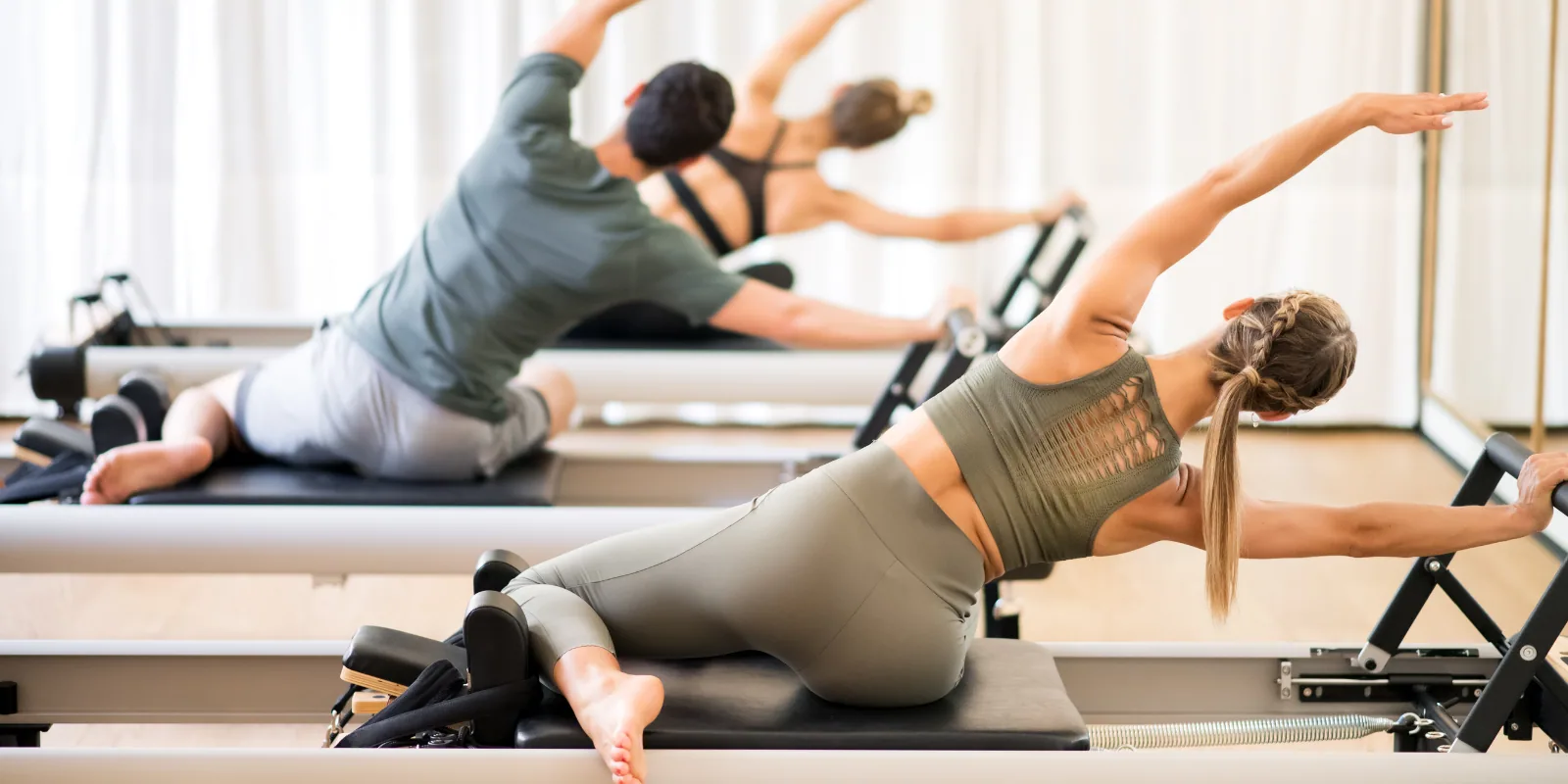
Pilates focuses on activating deep core muscles (transversus abdominis, multifidus) through precise, controlled movement, building stability through the spine and pelvis.
A 2025 meta-analysis comparing three types of core training — Pilates, core stability training, and core resistance training — in patients with chronic low back pain found Pilates delivered the best pain-relief results of the three, while core resistance training performed best for overall functional status.[2]
That improved core stability provides a strong foundation for other exercise done safely and correctly — whether that's weight training or a sport that demands core control.
Why Combining with Physiotherapy Boosts the Effect
Yoga + Physiotherapy
• Builds flexibility and body awareness
• Eases chronic tension driven by stress
• Well suited if tension is contributing to your pain
Pilates + Physiotherapy
• Builds core stability directly
• Precise, controlled movement — good for active rehab phases
• A solid foundation before returning to heavier training or sport
Can You Do This Alongside Physiotherapy?
Yes, and it's a good idea — but tell your physiotherapist what style of yoga or Pilates you're doing, and how often, so they can flag any poses or movements to avoid during your recovery. Choose an instructor who understands your current physical limitations, especially if you're still in the subacute phase of an injury.
Quick Guide: Which Goal, What to Prioritize
| Objective | Should Focus On |
|---|---|
| Increase flexibility, reduce muscle tension | Yoga + Physical Therapy |
| Increase core stability, recover from back pain | Pilates + Physical Therapy |
| Prepare body before returning to sports/heavy training | Pilates + Weight Training + Physical Therapy |
| Want overall flexibility and stability | Mix Yoga and Pilates + Physical Therapy |
LantavaFix Physiotherapy Clinic Koh Lanta
Tell us if you already practice yoga or pilates or are interested in starting. We will help recommend poses suitable for your body condition and adjust the physiotherapy plan to complement each other perfectly.
References
- [1] Zhu, F., Zhang, M., Wang, D., Hong, Q., Zeng, C., & Chen, W. (2020). Yoga compared to non-exercise or physical therapy exercise on pain, disability, and quality of life for patients with chronic low back pain: A systematic review and meta-analysis of randomized controlled trials. PLOS ONE, 15(9), e0238544. https://doi.org/10.1371/journal.pone.0238544
- [2] Guo, X. B., Lan, Q., Ding, J., Tang, L., & Yang, M. (2025). Effects of different types of core training on pain and functional status in patients with chronic nonspecific low back pain: A systematic review and meta-analysis. Frontiers in Physiology, 16, 1672010. https://doi.org/10.3389/fphys.2025.1672010
This article is written to provide general knowledge and is not a medical diagnosis. A program suitable for you should be assessed directly by a physiotherapist.