Felt a pop when you twisted your knee, or does it feel like it might give way?
Knee Ligament Rehab (ACL, MCL) on Koh Lanta
ACL tear, after ACL surgery, MCL sprain, meniscus or an unstable knee. Your physiotherapist builds a step-by-step rehab plan until you can trust your knee again.
- Free 30-min first consultation
- Licensed physiotherapists
- Insurance claim documents

Does this sound like you?
- You heard a "pop" in your knee when twisting
- The knee swelled up within hours of the injury
- It feels like it gives way when you walk
- You can't fully bend or straighten it
- You recently had knee ligament surgery
- You want to run, play football or get back to your sport
Why not just wait it out?
Without structured rehab after a ligament injury, thigh muscles waste quickly, the knee stays unstable and the risk of another injury rises. Rehab with clear goals for each stage gets you back safely.
If even one of these fits, start with a free 30-minute consultation. No charge.
Book a free consultationWhat makes LantavaFix different
Cause first
A proper history and examination every time, not just treating where it hurts
60–90 minute sessions
Enough time for assessment, hands-on treatment, equipment and exercises in one visit
Progress measured
Pain score and progress recorded each visit, so you can see how much you improve
Exercises in an app
Your programme on Physitrack with videos to follow at home or while travelling
Your first visit
- 1
Talk it through
Where it hurts, how long, and what makes it better or worse
- 2
Find the cause
Movement, muscle strength and nerve tests
- 3
Treatment starts
Hands-on and equipment-based treatment from the first visit
- 4
Your plan
Exercises to do, how many visits to expect, and what to avoid
Read about each condition
Each ligament and meniscus injury has its own rehab path. Pick the topic that matches you below.
1ACL tear (anterior cruciate ligament)
What it feels like
Often happens when pivoting, stopping suddenly or landing awkwardly. A pop, fast swelling, and a knee that feels loose when changing direction.
How we treat it
We reduce swelling and pain, restore full straightening, activate the thigh with electrical stimulation, then build strength and balance in stages, whether or not you have surgery.
See a doctor if
See an orthopaedic doctor to confirm the diagnosis with imaging and discuss surgery, especially if the knee gives way often or you play pivoting sports.
2Rehab after ACL surgery (ACL reconstruction)
What it feels like
After surgery the knee is swollen, painful, does not fully bend or straighten, and the thigh is weak. Rehab continues for several months.
How we treat it
We follow the post-op timeline and your surgeon's advice, from swelling control and range of motion to walking, then running, jumping and testing before return to sport.
See a doctor if
The wound is red, hot or discharging, you have a fever, one calf is swollen and painful, or the knee keeps getting more swollen.
3MCL sprain (medial collateral ligament)
What it feels like
Pain on the inside of the knee, usually from a blow to the side or a twist. It hurts when turning or standing on that leg.
How we treat it
We ease pain and irritation with equipment, strengthen the muscles around the knee and hip, and build activity back up according to the grade of injury.
See a doctor if
The knee is very loose sideways, you cannot take weight, or several ligaments may be injured.
4Meniscus tear
What it feels like
Pain along the inner or outer joint line, sometimes catching or locking, worse when squatting or twisting.
How we treat it
We reduce pain and swelling, restore movement, strengthen the thigh and retrain loading without twisting. Many people improve without surgery.
See a doctor if
The knee locks and won't straighten, swells again and again, or does not improve with consistent rehab.
5Knee gives way (instability)
What it feels like
The knee buckles or feels like it slips when going downstairs, changing direction or walking on uneven ground.
How we treat it
We work out whether it comes from a ligament, weak muscles or movement control, then train strength, balance and stable landing.
See a doctor if
It gives way so often you fall, it swells every time, or it has never been examined after a significant injury.
6Return to sport after knee injury
What it feels like
The pain has gone but you don't yet trust the knee to run, jump or play, and you are worried about re-injury.
How we treat it
We test strength, hopping and change of direction against the other leg, train sport-specific movements, and plan your return step by step.
See a doctor if
You still get swelling or giving way during training. Get reassessed before competing.
Equipment and methods we use
Your physiotherapist chooses what suits you after the assessment

Electrical stimulation
Gentle current to ease pain or wake up weak muscles
Learn more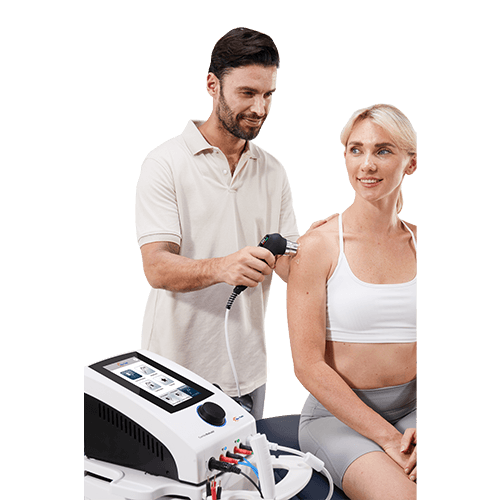
Ultrasound therapy
Sound waves to ease pain and help tissue heal
Learn more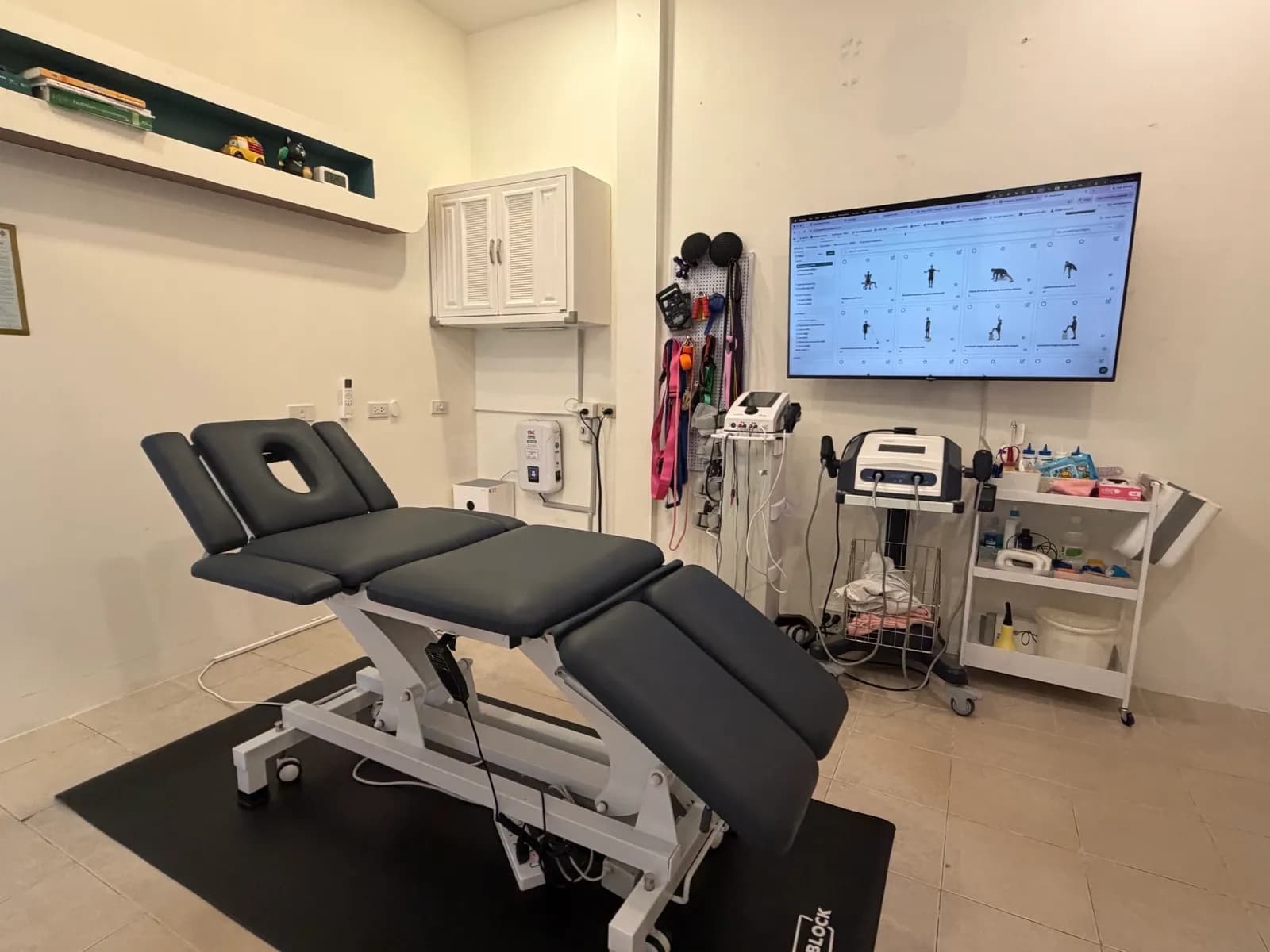
Functional training
Practise real moves: walking, stairs, lifting, sport

Home exercise plan
Exercises to keep improving between visits
Who will treat you
PT Suttida Chooluan
Physiotherapist · licensed by the Physical Therapy Council of Thailand
Treats both local patients and travellers, in Thai and English
View profileChoose your service when booking
Free consultation, 30 min
Not sure yet? A physio assesses you and suggests a plan, at no charge
Book a free consultationPhysiotherapy, 60–90 min
Assessment, hands-on and equipment-based treatment, and a personal exercise plan in one visit
Book for thisInsurance claim documents are issued right after payment
Inside the clinic


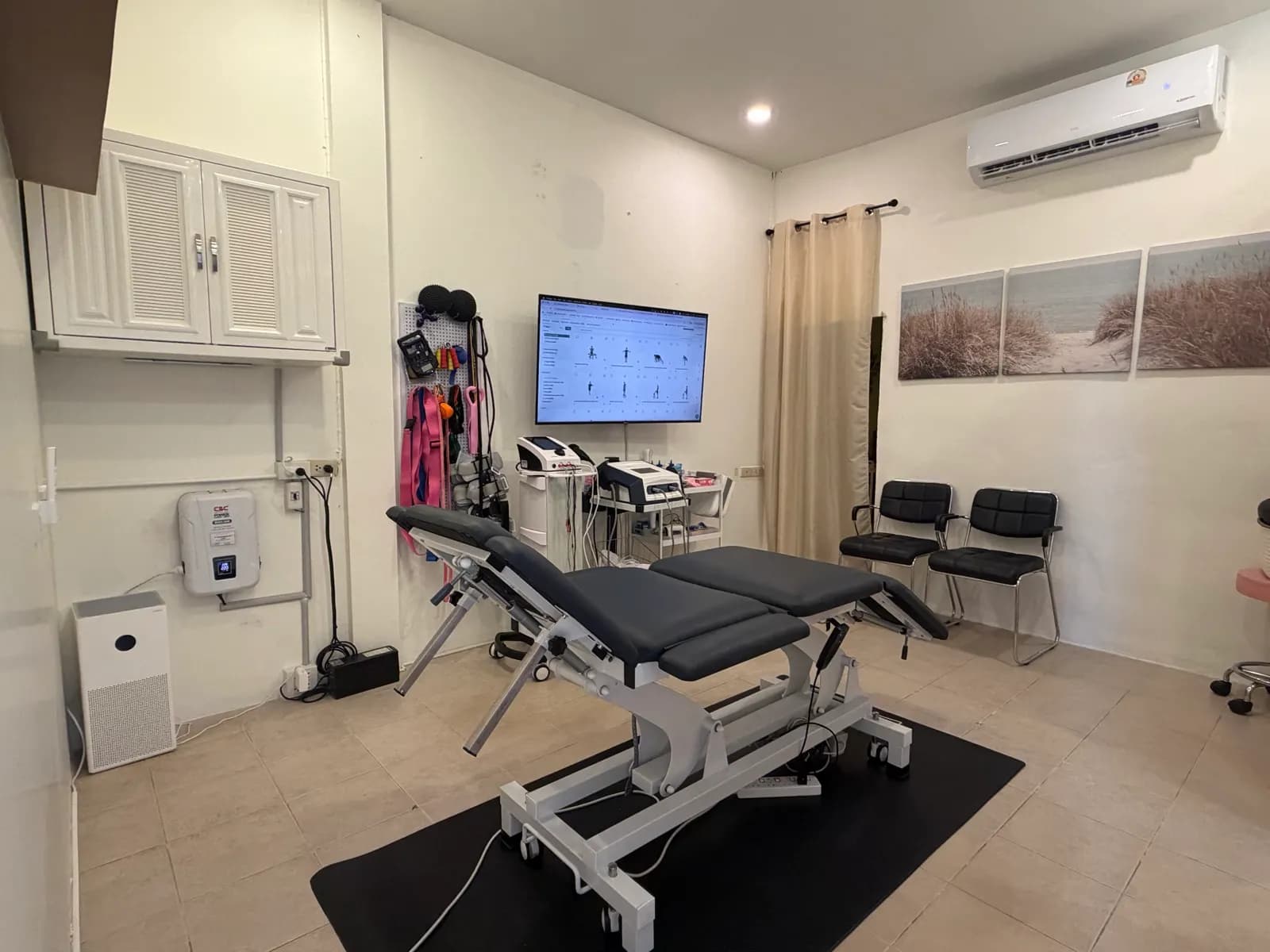
486/2 Moo 3, Sala Dan, Ko Lanta, Krabi 81150, Thailand Open Mon–Sat, 9:00 AM – 7:00 PM
Frequently asked questions
Does every ACL tear need surgery?
No. It depends on your age, activities and how unstable the knee is, and should be decided with an orthopaedic doctor. Physiotherapy is needed either way.
I had ACL surgery elsewhere. Can I continue rehab here?
Yes. Bring your surgical notes or your surgeon's protocol and your physio will continue from your current stage.
I'm only here for a few weeks. Can I keep going at home?
Yes. You get an app-based exercise programme to continue, and we can write a progress summary for your physio at home.
Can I claim from insurance?
The clinic issues insurance claim documents right after payment. Coverage depends on your policy.
Felt a pop when you twisted your knee, or does it feel like it might give way?
See a physiotherapist on Koh Lanta
Your condition is already selected on the booking page, just pick a time. Or message us first.
This page is general information, not a diagnosis. For severe or emergency symptoms, see a doctor immediately.